Design to Process: The Key to Justice Design
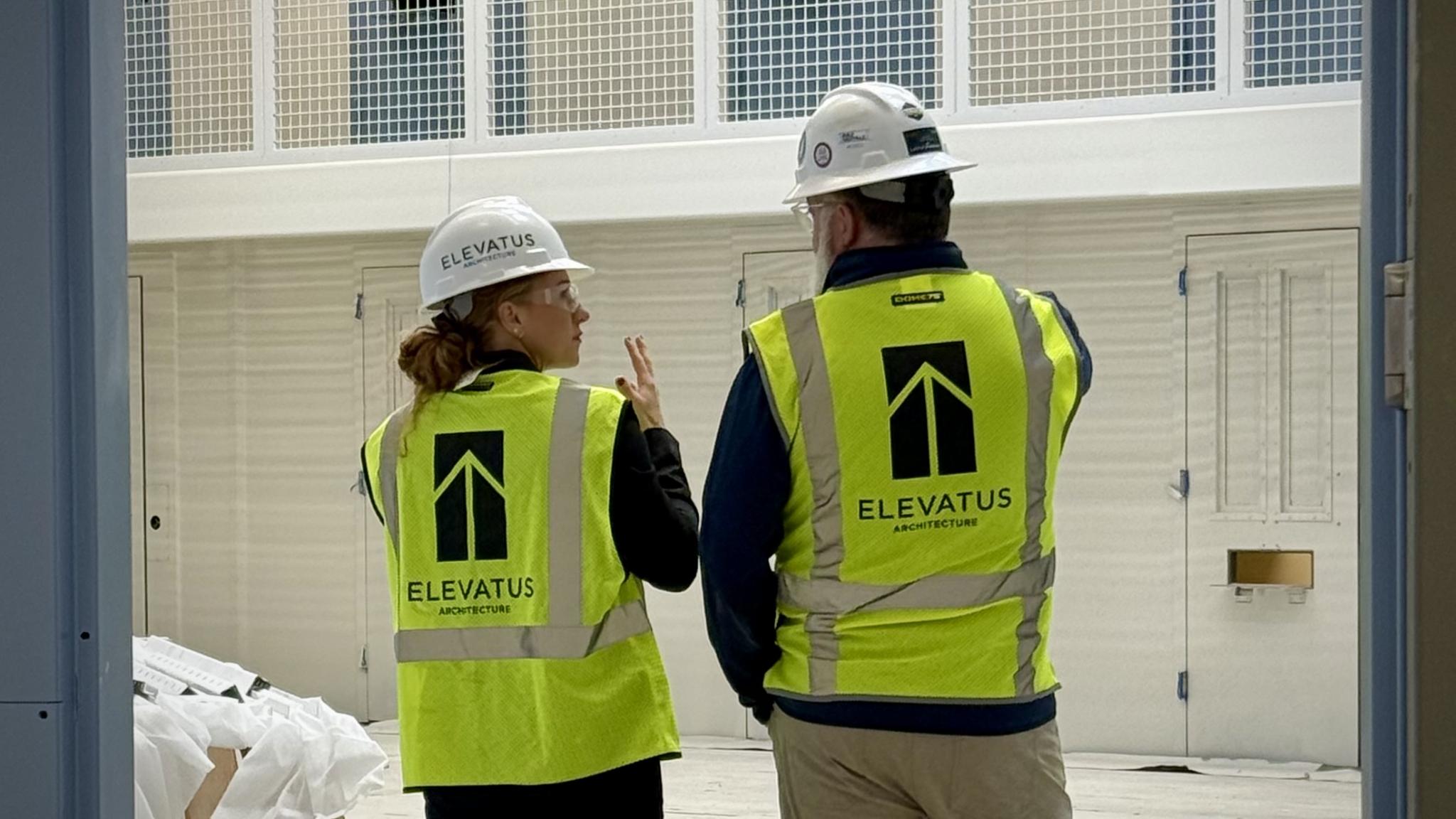
With a deep portfolio of justice facility projects across the United States, Elevatus approaches jail and detention center planning with a clear focus on operational clarity, efficiency, and long‑term adaptability. We design secure, resilient environments that support daily operations today while remaining flexible enough to serve evolving needs for decades to come.
What truly sets Elevatus apart, however, is how we begin.
Our Design to Process approach is grounded in a simple but often overlooked principle: the building should follow the work, not the other way around. Even with a team of nationally respected justice and correctional design experts, we intentionally set aside assumptions and familiar design models. We put our egos aside in favor of deep listening, trust‑building, and learning — because the people who operate these facilities every day hold the most valuable expertise in the room.
This process is exhaustive by design.
Elevatus works shoulder‑to‑shoulder with stakeholders at every level of the organization — from sheriffs and command staff to correctional officers, booking personnel, medical staff, and support teams. Through tireless meetings, workshops, and one‑on‑one conversations, we take the time to understand every aspect of daily operations: how staff move through the facility, where friction occurs, what slows operations down, what compromises safety, and what simply makes the job harder than it needs to be.
We don’t just ask how a department functions today. We ask how it should function in an ideal environment.
Together with stakeholders, we define desired workflows, staffing models, movement patterns, security philosophies, and programmatic priorities — grounded in real experience, real constraints, and real goals. Pain points, unmet needs, and aspirational improvements are all captured and translated into a clear, shared operational vision. This level of rigor often surprises clients, but it consistently proves its value.
Only after this operational framework is fully understood and documented does design begin.
The facility is then purposefully shaped around these processes, ensuring the building actively supports operations rather than forcing operations to adapt to the building. The result is a justice facility that improves efficiency, enhances safety, supports staff effectiveness, and delivers meaningful, mission‑driven outcomes.
Through a structured, transparent, and deeply collaborative process, Elevatus delivers justice facilities that work as hard as the people inside them.